Check the plug before you check anything else
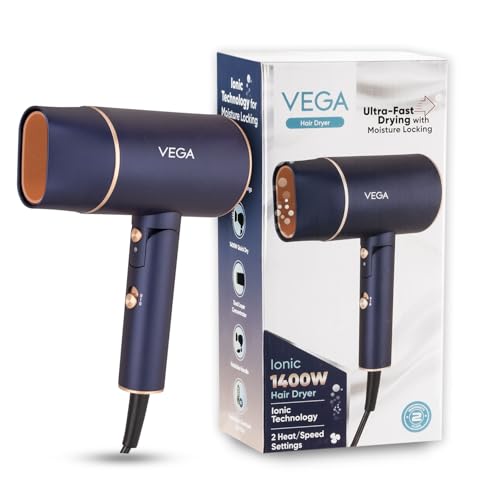
This is the single biggest trap in the sub-₹2,000 hair dryer market, and almost nobody mentions it. Dryers rated roughly 1,565 W and above are legally required to ship with a 16A heavy-duty plug — the fat three-pin type your air conditioner or geyser uses. It will not fit the ordinary 6A socket in your bedroom or bathroom. Amazon almost never states plug amperage in the specifications, and several of these listings are non-returnable, so buyers discover the problem only after the box is open. VEGA is the honourable exception and states it plainly in its feature bullets. The practical rule: if a dryer claims more than about 1,500 W and does not explicitly say 6A, assume it needs a high-amp socket and check before you buy. Every dryer we recommend above runs on an ordinary socket.
Treat the wattage number as marketing, not measurement
Wattage in this price band is not comparable across brands. Owners report a 1200 W Havells producing more usable heat than a 1400 W AGARO, and dual ranges like '1200–1400 W' quote the peak draw rather than what the dryer sustains. What actually predicts drying force is the motor type — a true AC motor beats a DC motor at the same claimed wattage — but almost no listing in this band publishes it. Of the fourteen dryers we evaluated in detail, exactly one names its motor type, and that is the BEARDO. In the absence of that figure, the most reliable signal is what verified Indian owners say about how long their hair actually takes. Where owners repeatedly say 'only warm air' or 'takes 30 minutes', ignore the sticker.
The cool shot is the feature most likely to be a lie
Nearly every dryer here advertises a cool shot, and it is the single most-failed advertised feature in the category. There are two separate problems. The first is design: on many models the 'cool' setting is simply the third position on the heat slider rather than a dedicated button, so you cannot pulse cold air over a finished style. The second is that even genuine cool-shot buttons often blow warm — owner complaints of exactly this appear on the Havells HD3151, HD3161 and HD3162, on Philips HP8120, BHC010, BHC017 and BHD308, and on the AGARO HD-1120. Two things follow. If the cool shot matters to you, do not buy it on the specification sheet alone; look for owners confirming it works, as they do for the AGARO HD-1214 above. And be aware that some cool-shot buttons must be held down continuously rather than latching, which several owners find genuinely annoying in daily use.
Read the recent reviews, not the star rating
The star rating on a long-running listing is an average over its entire history, and in this category that history is often much kinder than the present. The clearest example: the best-selling hair dryer on Amazon.in shows 4.3 stars across more than 67,000 ratings, yet 52% of its last 100 verified Indian reviews are one or two stars. A second best-seller shows 4.3 stars while 47% of its recent reviews are negative. Neither is on this page, for that reason. The gap exists because early buyers of a successful product rate it well and their volume permanently anchors the average, while a later change in components or quality control shows up only in reviews nobody scrolls to. Sort by most recent, filter to verified purchases, and read the first fifty. It takes ten minutes and it is the most useful thing you can do before buying anything in this band.
Two years of warranty should be the floor, and service reach matters more than the term
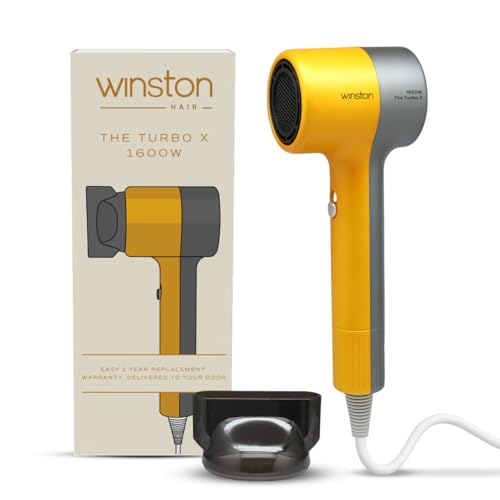
Two years is standard from Havells, Philips, VEGA, AGARO, Pigeon and Morphy Richards in this band. One year, or no published term at all, should give you pause — and several products we screened publish nothing whatsoever, including the Winston and the BEARDO above. But the term is only half the story: a warranty is worth what the service desk behind it is worth. In the reviews we analysed, owners of both Havells and Philips describe raising complaints repeatedly and getting no resolution, while AGARO's replacement handling draws unusually warm and specific praise from owner after owner. That does not make AGARO's dryers more reliable — if anything the opposite — but it does change what a failure costs you.
Match the wattage to your hair, and the weight to your bag
For short hair, or for a dryer that mostly lives in a suitcase, 1000 W and 300 grams is a sensible combination and will dry you in a few minutes. For long or thick hair, 1000 W is a genuine frustration — owners say so repeatedly — and you want 1400 W or more, accepting that the dryer will be heavier and louder. Foldability is worth more than it sounds if the dryer lives in a drawer or a bag, but note that the folding hinge is also the most common mechanical failure point in this band: broken handles and hinges appear far more often in the complaint record than burnt-out motors do on the better products. If your dryer stays on a bathroom shelf, a fixed handle is one less thing to break.
Expect a compromise, and pick which one
Under ₹2,000 there is no dryer that is powerful, gentle, light, quiet, well-attached and durable all at once — every product on this page gives up at least two of those. The strongest airflow comes with a box that may be missing an attachment. The most dependable one has only two heat settings. The best specification per rupee comes with owner reports of smoke. The lightest one has no cool setting at all. Decide which single attribute you actually care about before you shop, because the market will not let you have them all at this price. If you want power, gentleness and durability together, that is a ₹2,000 to ₹5,000 purchase, not a ₹2,000 one.