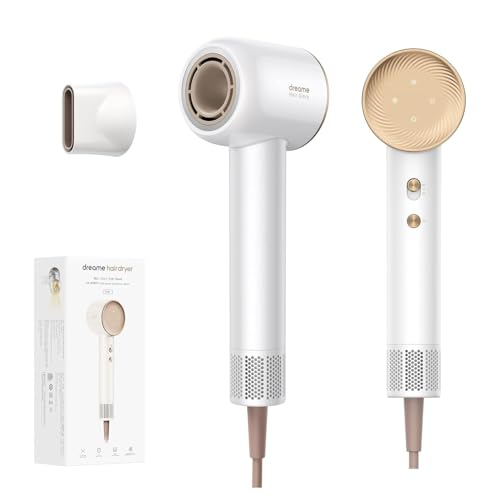
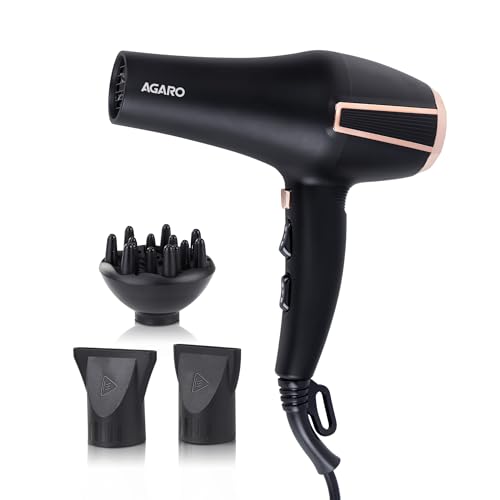
The plug is the single most important thing to check, and almost nobody publishes it
Indian bathroom and dressing-room sockets are usually rated 6 amps. Any dryer drawing more than about 1,380 watts needs a 16A plug — the big three-pin kind — which will not fit them. In the ₹2,000–₹5,000 band that problem belonged to high-wattage AC dryers. Here it is worse, because it also catches the high-speed brushless dryers you are probably upgrading to: the Laifen SE Lite at 1,400 W and both Dreame models at 1,600 W all ship 15A or 16A plugs, confirmed by their own Indian owners. Almost no listing says so — on eight of our ten candidates we had to read it out of review text. Before you buy, decide where the dryer will actually be plugged in. If that socket is a normal 6A one, you need either a dryer with a converter in the box (Laifen is the only one here that supplies one) or a 16A point installed. This is not a reason to avoid these dryers; it is a reason not to be surprised by them.
Above ₹5,000, wattage stops being the number that matters
A 2,800 W AC dryer and a 1,400 W brushless dryer sound like they are two classes apart, and they are — but not in the direction the numbers suggest. The AC unit dries by heat, evaporating water off the hair. The brushless unit spins at 100,000 to 110,000 rpm and dries by moving air, which is faster and cooler. That is why a 1,400 W Laifen or a 1,600 W Dreame will finish a head of thick hair before a 2,800 W AGARO, and leave it in better condition. Wattage is only a useful comparison between two dryers of the same motor type. Watch for the trap in the middle: a product can advertise a "Brushless DC Motor" at 2,800 W, as the Ikonic Pro 2800+ does, and still be a conventional heat-led dryer — the brushless claim there is about motor lifespan, not air speed, and the listing publishes no rpm at all. If a dryer claims brushless but will not tell you its rpm, assume it is not a high-speed one.
Ignore the airflow figures — brands are not measuring the same thing
Dreame publishes 65 to 70 metres per second. Laifen publishes 19 metres per second. These are near-identical dryers, and that 3.7× gap is a measurement-convention difference — air speed measured at a narrow nozzle is a much bigger number than the same air measured at the outlet — not a real performance difference. If you see an air-volume figure in cubic metres per hour or per minute, that is somewhat more meaningful, because volume is harder to flatter; the Dreame Glory's 55 m³/h is the only such figure published in this band. Otherwise, rank on motor type and rpm, and read what owners say about how long their hair actually takes.
A cool shot is the most-failed feature in this category — insist on owner confirmation
Nearly every dryer here advertises cool air, and across three price bands of research it is the feature that most often turns out not to work as sold. Two failures are common: a "cool mode" that is really just the lowest heat setting, and a cool shot that owners report blowing warm. The only reliable evidence is an owner saying it works, so it is worth searching a listing's reviews for the words cool or cold before you buy. In this band two products pass that test — the Laifen SE Lite, where an owner writes that "the air is actually cold! not warm unlike all the other ones", and the Dreame Glory, where owners name the cold shot specifically. The dreame Gleam never names a cool shot anywhere on its listing at all.
Check how many of the reviews are actually Indian
Amazon.in shows a global rating, and on imported products that number can be almost entirely foreign. The dreame Gleam on this page carries 545 ratings at 4.5 stars, and when we went through every star stream we found 165 verified reviews of which exactly three were from India. The other 162 are Italian, French, Spanish and Polish buyers describing European stock on European voltage with European service behind it. A foreign review cannot tell you whether the plug fits your socket, whether the dryer survives an Indian voltage dip, or whether anyone will answer the phone when it breaks. Scroll to the reviews and look at the "Reviewed in…" line on each one. If most of them name another country, the star rating is not about you.
Warranty is worth less than a service record — check both
Every brand in this band except Laifen publishes a warranty term, and Laifen's silence on a ₹5,499 import is a genuine mark against it. But a warranty is only as good as the desk behind it, and review text is where you find that out. AGARO's two-year cover is backed by the best service evidence in this run — owners describing same-day complaint registration and smooth refunds — which matters, because AGARO is also the least reliable product here. Dreame publishes an Indian support email and toll-free number, but one owner was promised a free plug converter and got fifteen days of silence instead. When you read reviews, treat a five-star review that describes a replacement as evidence the product failed, not evidence that it works.
This price band is unusually empty — and knowing that saves you money
We looked at around 35 listings between ₹5,000 and ₹10,000. Everything with a real Indian review record turned out to sit between ₹5,490 and ₹5,999. Above ₹6,000 the band is made up of foreign-market SKUs with no Indian reviews at all — BaByliss, Remington, Revlon, Conair, Hot Tools and several unbranded imports — and Indian-brand listings carrying zero ratings of any kind, several of which had zero ratings four months ago too. The practical consequence is simple: there is nothing between ₹6,000 and ₹10,000 worth paying for right now. Either spend ₹5,500–₹6,000 on one of the evidenced products here, or skip the band entirely and look at the premium shelf above ₹15,000, where the evidence returns.