Corded, cord/cordless or cordless — pick by where you will use it
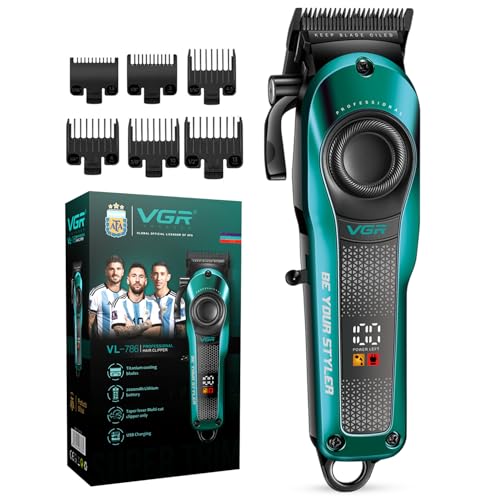
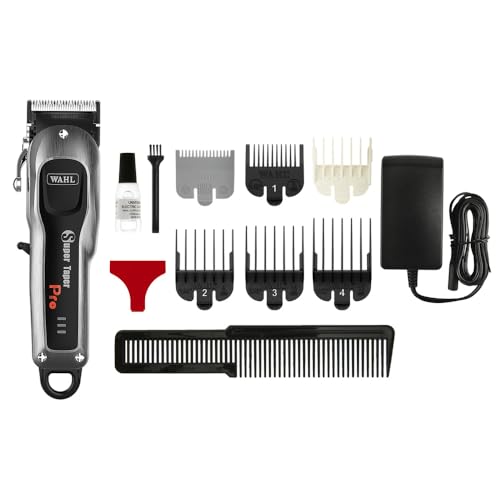
A corded clipper never stalls and never runs flat mid-haircut, which is why it is the barber standard and the safest choice for cutting a full head — the Remington HC5035 and HC5020 and the corded Wahl Super Taper here are all mains-only. A cord/cordless hybrid, like the Wahl Super Taper Pro or the VGR VL-786, gives you the freedom of cordless with a plug-in fallback, which is worth real money in areas with frequent power cuts. Pure cordless USB units are the cheapest and most convenient, but they depend entirely on a battery that, in this category, tends to weaken after a year or so.
Heat is the number-one real-world complaint — plan around it
Across almost every budget cordless clipper in this roundup, the most common recent complaint is the blade or the body heating up after 10 to 15 minutes of continuous use. It is rarely a defect: small DC motors and tightly set blades simply warm up. For one quick self-haircut it is a non-issue. For cutting two or three people's hair back to back, either buy a stronger motor — Wahl's electromagnetic, rotary or BLDC units — or simply pause and let the blade cool, which costs you nothing but a minute.
Guard-comb range decides which hairstyles you can actually cut
If you only ever buzz short, any clipper in this list works. If you want to leave the top longer and blend down the sides, you need long combs and a taper lever, and that narrows the field sharply. The Remington HC5035 reaches 25 mm and has the widest range here; most budget clippers stop at 12 or 13 mm, which rules out scissor-length tops entirely. A taper — or blending — lever lets you fine-tune the cutting length mid-stroke without swapping combs, and it is the single feature that separates a clipper you can fade with from one you can only buzz with.
Motor class matters more than the rpm number
A "7,000 rpm!" claim on a budget clipper is not comparable to a Wahl figure. A small DC motor spinning quickly still delivers less cutting torque than Wahl's electromagnetic motor at 6,000 rpm, its rotary at 5,500, or a modern brushless BLDC — and torque, not speed, is what stops the blade snagging and stalling in dense hair. If your hair is thick, or you will be cutting often, that is the difference you are paying for. The same scepticism applies to materials: "titanium" on a sub-₹3,000 blade is a thin coating over steel, not the metal.
Check the seller, not just the product — used-unit deliveries are real
On some of the most popular clipper listings here, a recurring recent complaint is receiving a used, open-box or second-hand unit — the corded Wahl 08466-424 is the clearest case in this roundup, and it is a big part of why its recent-negative share sits at 42%. This is a seller and fulfilment problem rather than a design fault, but it ruins the purchase either way. Buy from a listing sold and shipped by Amazon or by the brand where you can, and check that the box seal is intact the moment it arrives — if it is not, return it rather than trying it.
Do not be fooled by a big star rating built on foreign reviews
Several clippers here show thousands of ratings, and most of those ratings are from the UK, the US or Europe — the Remington HC5035's 38,944-rating average is roughly 99% foreign. A high global rating tells an Indian buyer almost nothing about the stock they will receive, the warranty they can claim or the service they can reach. Filter to reviews written in India, sort by most recent, and prefer a clipper with a smaller but current and healthy Indian review base over one riding a huge foreign number. It is the same trap that runs through electric shavers, where two Braun listings turned out to have no Indian review record at all.
A clipper is one of four tools, and it only does one of the jobs
A hair clipper is built for the scalp: a wide blade, long guards and enough torque to move through dense hair. It is the wrong shape for everything else. Facial hair needs the fine length steps and narrow blade of a beard trimmer — a clipper's guards start too long and its blade is too wide to edge a beard line. Below the neck you want the rounded tips and skin guards of a body groomer, because a clipper blade on contoured skin catches. And nose and ear hair needs the rotary geometry of a dedicated nose trimmer. If you want the lot in one box, a multi-grooming kit ships a clipper-style head alongside the rest — with a smaller motor than any dedicated clipper here.