Know what a pore vacuum can and cannot do
A blackhead is a plug of oil and dead skin that has darkened at the opening of a follicle, and it is anchored inside the follicle rather than sitting on top of it. Suction on the skin surface cannot pull an anchored plug out. What it reliably lifts is loose surface oil, debris and sebaceous filaments — the pale grey threads on the nose that many people mistake for blackheads and that refill within days whatever you do. That is why "it removed nothing" is the most common complaint across every device in this list. Buy one as a maintenance tool that keeps pores clearer between proper cleansing and you will be satisfied; buy one expecting to clear a nose full of stubborn blackheads in one session and you will join the quarter or so of Indian buyers who rate these devices one star.
Suction control matters far more than suction power
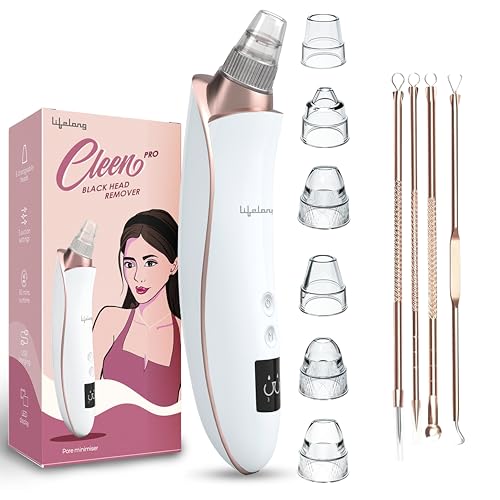
Every listing promises powerful suction and none of the devices we evaluated in depth publishes a kPa figure. That matters less than it sounds, because raw power is not what you want. A device with three to five selectable levels is meaningfully safer than a stronger single-setting one, because it gives you a gentle setting for the cheeks and sensitive skin. Better still is a device that shows which level is active — with five settings and no display you are guessing, which is how skin gets marked. The Lifelong CleenPro is the only device here that does both. Treat a vague "adjustable suction" claim with no number as meaning nothing.
The rim of the probe head is what bruises you
The circular red rings in this category's review photos are petechiae — tiny broken capillaries caused by sustained suction on one patch of skin. What concentrates that pressure is the edge of the head: a hard moulded plastic rim presses a narrow ring into the skin, while a rounded or silicone rim spreads the same force. Only the NexLev BR-01 explicitly names silicone probes on most of its head set, and the MORTON DAVIES names one silicone head, which tells you both how much the feature matters and how rarely sellers mention it. If a listing names its head types at all, that is already above average for this category.
Technique prevents more damage than any feature
The Indian buyers who report good results describe the same routine, and the ones reporting bruises describe the opposite. Cleanse, then steam or hold a warm towel on your face for five to ten minutes — this softens the sebum and genuinely changes what suction can lift. Start on the lowest level. Keep the head moving in slow, straight passes and never hold it still; a few seconds in one spot is how the rings appear. Go over any area once or twice only. Finish with a cool rinse, a moisturiser and sunscreen if you are heading out. Use it once a week at most, and rinse the heads after every session, because a nozzle that has pulled oil out of your pores goes back on your face next time.
Filter the reviews to India before trusting any rating
This is the single most important thing to know when buying a blackhead remover on Amazon.in, and it is why this list is short. Of the devices we looked at seriously, nine had no verified reviews from India at all, despite headline rating counts running from 697 to 29,703 — those stars come from buyers in the US, Europe and the Gulf, of stock that may never have been sold here. Others wrapped a few Indian reviews inside a large foreign total: one 4.5-star listing with 5,711 ratings had exactly seven Indian reviews, five of them one-star. Open the reviews, filter to India, and count how many there really are.
A published warranty is the best quality signal available
With no kPa figures, no battery capacities, no head materials and often no real model number, the warranty term turns out to be the most useful sign of a real company behind the device. Only two of the devices we shortlisted publish one — the NexLev BR-01 and Winston WBR-101, both from Indian companies with an address, phone number and email on the listing. Sellers using placeholder part numbers like "001" or "45", or reachable only at a Gmail address, are not running a service operation, and many of this category's negative reviews are about exactly that: returns never collected and refunds never paid.
What the price actually buys
Much of this category is the same two or three Chinese OEM chassis under a dozen brand names — during our research, eight listings shared a word-for-word identical title at prices from ₹249 to ₹399. Around ₹300 to ₹500 you are buying a lottery ticket: most units work, a meaningful minority arrive dead, and there is no warranty either way. Between roughly ₹1,100 and ₹1,950 you are not buying dramatically stronger suction; you are buying documentation, an Indian company with a service address and, in two cases, a real one-year warranty. Given how often these devices fail, that is a defensible thing to pay for. A ₹5,000-plus imported listing with no Indian review history is not.